
Commercial Waste Bayswater Health and Safety Policy
Purpose: This policy sets out the commitment of our rubbish company service area to manage health and safety risks arising from commercial waste, recycling and disposal operations. It applies to all staff, contractors and visitors engaged in commercial waste collection, transfer and processing and to anyone affected by our waste management service activities. Our priority is preventing harm while delivering dependable waste removal services.Scope and Responsibilities
All managers and supervisors in the rubbish removal service are responsible for implementing this policy and ensuring that staff follow safe systems of work. Employees must cooperate with safety instructions, use provided personal protective equipment (PPE) and report hazards or near misses. The organisation will provide clear roles for site-based teams, drivers and operational planners to ensure consistent standards across the service area.
Risk Assessment and Control Measures
Risk assessments are carried out for routine activities including refuse collection, bin handling, vehicle loading, compacting and depot operations. Identified hazards are controlled by eliminating risks where practicable, substituting processes, engineering controls (guarding, lockouts), administrative controls (safe operating procedures, traffic management) and appropriate PPE. The waste management service maintains documented safe methods for manual handling, working at height on skips and accessing confined spaces, and for separating hazardous items from general commercial waste.Training, Competence and Supervision
Staff receive role-specific training covering manual handling, vehicle safety, hazardous materials awareness, spill response and emergency procedures. Supervisors ensure competence through observation, refresher training and competency assessments. New starters and contractors receive induction briefings tailored to the rubbish company service area and depot practices. Training records are kept to demonstrate ongoing competence.
Vehicles, Plant and Equipment
Vehicles and plant used in commercial waste collection are subject to pre-shift checks and scheduled maintenance. Drivers and operators must follow safe driving policies, load restraint rules and parking protocols to protect the public, clients and crew. Equipment including compactors, lifts and conveyors have guarding and isolation procedures to prevent accidental start-up. Faulty equipment is taken out of service until repaired.Hazardous Waste and Special Handling
The service recognises the increased risk posed by hazardous or special wastes found in commercial bins. Staff are trained to identify, segregate and report hazardous items such as chemicals, sharp objects, batteries, electronic waste and asbestos-containing materials. Clear labelling and containment procedures are used to prevent cross-contamination. Where specialist handling or disposal is required, the matter is escalated to qualified teams to protect workers and the environment.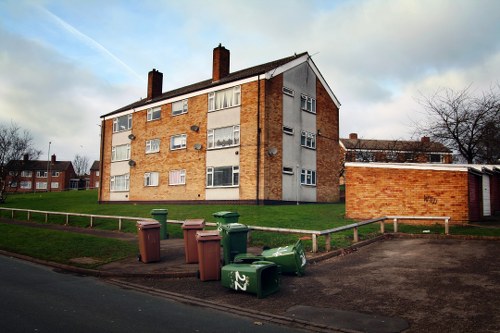
Incident Reporting, Investigation and Continuous Improvement
All incidents, near misses and injuries are reported promptly and investigated to identify root causes and corrective actions. Lessons learned are communicated across the rubbish removal service to prevent recurrence. Performance is monitored using safety metrics such as reported incidents, accident frequency rates and audit outcomes. Periodic reviews of this policy and relevant procedures ensure that the waste collection service adapts to operational changes and emerging risks.
Emergency Preparedness and Environmental Protection
Emergency plans cover vehicle collisions, spill response, fire, medical emergencies and severe weather. Crews carry spill kits and have access to emergency contact information for authorised response teams. Environmental protections include measures to control litter, prevent pollution during transfer and secure loads in transit. Prompt reporting of environmental incidents supports rapid containment and remediation to protect nearby properties and ecosystems.Health, Wellbeing and Welfare
The company promotes occupational health through health surveillance where risks warrant it, access to welfare facilities and policies to manage fatigue and stress. Manual handling reductions, task rotation and ergonomic measures reduce musculoskeletal risks. Programs to encourage hydration, warm clothing for cold shifts and sun protection for outdoor work reflect a practical approach to wellbeing across the service area.Consultation, Communication and Compliance
Effective communication and worker consultation are essential. Safety briefings, toolbox talks and documented procedures help staff participate in continual improvement. Audits and inspections check compliance with this policy and with relevant waste management standards. Contractors and third parties working within the service area are required to meet the same safety expectations and to cooperate with site-specific requirements.Key Safe Work Practices
- Carry out pre-shift vehicle and equipment checks.
- Use suitable PPE for the task; gloves, high-visibility clothing, boots and eye protection.
- Follow safe lifting techniques and use mechanical aids where possible.
- Segregate hazardous items and report them immediately.
- Secure loads and adhere to traffic and pedestrian management plans.
- Report incidents and hazards without delay; participate in investigations.
Commitment: The organisation is committed to providing the resources necessary to implement this policy, to maintain safe working conditions and to ensure continuous improvement in the delivery of commercial waste services. By focusing on risk control, competence and communication, our rubbish company service area aims to protect people, property and the environment while delivering reliable, professional waste and recycling solutions.
