Commercial Waste in Bayswater

Commercial waste in Bayswater needs a service that can handle day-to-day rubbish, bulky items, and trade debris without disrupting business routines. We provide a practical waste removal service for offices, shops, hospitality venues, managed properties and other commercial premises, with collections planned around access, load size and the type of material to be taken away. The emphasis is on clear communication, sensible sorting and responsible disposal, so waste is removed efficiently and the premises are left ready for normal use.
Our work covers a wide range of business waste streams, from mixed non-hazardous rubbish to furniture, fixtures, appliance items and refurbishment debris. Where different materials need different handling, we separate them for recovery or disposal in line with the item type. That approach supports a cleaner workplace and helps businesses avoid letting waste pile up in storage rooms, rear yards or loading areas. If you need a straightforward commercial waste collection in Bayswater, the service is designed to be flexible enough for one-off clearances and repeat removals.
For a clear quotation, it helps to outline the material type, approximate volume and the easiest point of access. You do not need a full inventory before getting in touch, but a short description of what needs moving will help us judge the work properly. Tell us what you need removed and we can discuss the most suitable way to approach it. If you are comparing options, our pricing page and service details can help you decide what to request first.
Business waste removal for day-to-day operations

Business waste removal is often about keeping operations smooth rather than handling a single dramatic clearance. Office paper waste, packaging, obsolete stock, broken fittings and mixed rubbish can all take up useful space if they are not removed on time. We handle those ordinary accumulations with the same care as larger clearances, taking account of building access, lift use, stair carries and any loading restrictions that may affect the job. The aim is to keep removal orderly and to reduce the amount of time waste sits in working areas.
Different businesses generate different kinds of refuse, so the best approach is rarely a one-size-fits-all collection. A retail unit may need cardboard, shelving and display material removed together, while a shared workspace may need confidential papers, office chairs and general rubbish handled in separate batches. Where needed, we can group collections into manageable stages rather than trying to move everything at once. Our business waste removal service is the right starting point when you need regular or one-off commercial clearance work.
Typical jobs can involve clearing back rooms, cellar storage, service corridors, plant rooms, customer areas or delivery spaces. To keep things manageable, it is useful to know whether the waste includes loose sacks, boxed items, large furniture or awkward objects that need two-person handling. The more clearly the work is described, the easier it is to match the collection to the site conditions. That leads to better planning and fewer surprises on the day.
Office clearance and equipment disposal
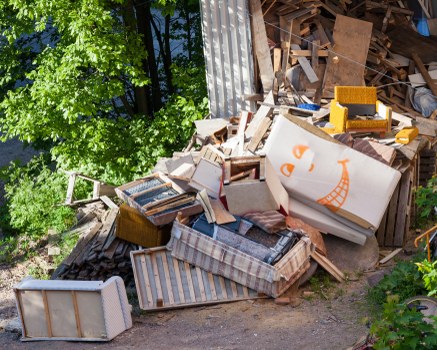
Office clearance requires more than simply lifting items away. Desks, task chairs, filing cabinets, monitors, printers, cabinets and assorted storage pieces often need to be moved carefully through shared circulation routes. We handle office waste as a practical clearance service that can deal with individual redundant items or with larger changes such as floor rearrangement and end-of-lease emptying. Careful handling matters, especially where items are heavy, awkward or close to walls, screens and flooring that should be protected during removal.
Many offices also need help with material separation. Cardboard, loose office paper, e-waste related items and furniture rarely belong in the same treatment stream, so it helps to separate them in a way that supports responsible disposal. Where confidential material is part of the job, the collection can be planned so that documents are set aside for appropriate treatment. Office clearance is useful when the premises need a tidy, organised removal rather than an ad hoc disposal arrangement.
For an accurate quotation, it helps to know whether the building has lifts, restricted parking, timed access or narrow corridors, because those factors can affect how the work is organised. If items are still assembled, or if computers and peripherals are still connected, that is worth mentioning too. Good preparation is mainly about clarity: what is staying, what is going, and how the team can reach it safely. That information keeps the quote realistic and the collection straightforward.
Waste removal for refurbishments and site clearances
Refurbishment and fit-out projects often create mixed waste that is too varied for a simple bin solution. Packaging, offcuts, old fixtures, redundant shelving, timber, plasterboard, metal components and general debris can accumulate quickly as work progresses. Our waste removal service is suited to that kind of changing site, where the materials may need to be loaded in stages and removed with attention to what has been separated already. It is a practical option for landlords, contractors and businesses preparing space for new use.
Where a commercial site is being rearranged, the main decision is usually whether the clearance should happen once at the end or in phases during the project. End-of-job collections suit lighter volumes of assorted debris, while phased removal is often more useful when access is tight or the work produces waste continuously. Builders waste clearance is one route for construction-related material, while broader commercial collections can be arranged when the waste is mixed and not limited to one trade.
Some premises require careful handling around floors, fixtures and active work areas, so timing matters as much as the load itself. If you are planning around contractors, it helps to note when the building is open, whether any areas are being used by customers, and whether items are piled in one place or spread across several rooms. That is often enough to shape the collection and avoid unnecessary delay. Clear site information usually matters more than long explanation.
Furniture, fixtures and bulky item disposal

Commercial premises regularly produce bulky waste that is still usable in shape but no longer needed on site. Tables, shelving, reception furniture, counters, storage units, filing cabinets and worn seating all take space and may be difficult to move without the right approach. We remove bulky commercial items with attention to access, weight and the route out of the building, making it easier to clear rooms without unnecessary damage or disruption. The service can be useful during reconfiguration, relocation or general office and shop rationalisation.
Not every bulky item belongs in the same disposal path. Some pieces are suitable for dismantling, while others are best taken away intact to avoid extra labour and mess. Mixed furniture loads often work best when the larger items are identified in advance and any small loose waste is gathered separately. Furniture clearance is a helpful option where the main task is the removal of desks, cabinets and other large items rather than general rubbish alone.
For occupiers who want to keep storage rooms usable, bulky-item removal can be scheduled around trading hours or access windows. That is especially useful when the furniture is stored in back offices, stockrooms or shared areas that need to stay open for staff. If disassembly may be needed, it is worth saying so from the outset. This lets the collection be priced and planned more accurately, rather than treated as a simple lift-and-load job.
Confidential waste and secure handling

Some commercial waste requires a more careful approach than standard rubbish removal. Paper records, files, archived folders and other sensitive office material may need to be separated from ordinary waste and kept secure during collection. We can deal with confidential shredding and document disposal as part of a wider commercial clearance, so that sensitive items are not left mixed with general refuse. The service is useful for offices, professional practices and organisations that need a tidy, controlled way to dispose of stored records.
Secure handling is usually about process rather than complexity. Sensitive waste should be identified early, kept apart from mixed rubbish and passed through the correct route for destruction or disposal. Confidential shredding is the most relevant page if document security is your main concern, while a broader commercial waste request works better when paper disposal is only one part of the job. Either way, it helps to say whether the material is loose, boxed or still in filing units.
When asking for a quotation, mention any access rules that affect the movement of records, because some workplaces keep secure areas locked or supervised. A simple description is usually enough: approximate number of boxes, folders or cabinets, plus whether the material is to be taken from one room or several. That allows the collection to be arranged sensibly while keeping the process discreet and efficient. If you need to request a quotation, a short summary is the best starting point.
Recycling, sorting and disposal routes
Commercial waste is rarely just one material, and good disposal depends on separating what can be recovered from what must be discarded. Cardboard, metals, wood, appliances, furniture and general rubbish each tend to follow different routes, so the collection process works best when items are grouped with some care before loading begins. We can sort mixed waste during the removal process where appropriate, which helps avoid simply throwing recoverable material into general disposal.
The benefit for businesses is practical as much as environmental. A better sorted collection is usually easier to load, easier to explain and easier to match to the right disposal channel. Recycling and sustainability explains how recovered materials are approached, while the collection itself remains focused on clearing premises in a tidy, workable way. If your waste includes a mix of clean recyclable items and general refuse, it is useful to mention that mix when asking for a price.
Some loads are straightforward, while others contain items that need a little more thought before disposal. For example, mixed office clearances often include paper, packaging and furniture; shop clearances may include display material, stock waste and broken fixtures; light industrial premises may generate metal offcuts and general debris. The more accurately the waste is described, the more carefully it can be sorted. That usually saves time at collection and helps the disposal route match the material.
About Bayswater
Bayswater is an inner London district in the City of Westminster, positioned to the west of central London and close to the northern edge of Kensington Gardens and Hyde Park. It is known for its late Georgian and Victorian terraces, mansion blocks and hotel buildings, many of which give the area a dense, formal streetscape. The neighbourhood sits within a highly urban part of west London, where tree-lined residential roads meet busy commercial corridors such as Queensway and Westbourne Grove. Its built character reflects repeated phases of development, from aristocratic garden squares to later speculative housing and modern redevelopment. The area’s name is often associated with Bayswater Road, which runs along the park edge and has long formed a distinctive boundary between the open space of Hyde Park and the surrounding streets. Nearby Paddington Station, Lancaster Gate and Notting Hill Gate connect the district to wider transport networks, while the local street pattern makes walking a defining part of everyday movement. Bayswater also has a strong international character, with hotels, restaurants and apartment buildings serving residents and visitors from many backgrounds. That mix has helped shape a lively, practical urban district rather than a single-purpose residential quarter. Despite the intensity of development, the proximity of parkland gives the area a notable contrast between open green space and tightly built streets. The result is a place with a clear sense of pattern and scale, where architecture, transport and public space remain closely interwoven.
Pricing, access and practical collection planning
Commercial clearance costs are usually shaped by the type of material, how much needs to be moved, and how simple the access is from the building to the vehicle. Loads that contain bulky furniture, heavy items or awkward stair carries naturally require more handling than straightforward sack removals. Timing, parking arrangements and the number of separate pickup points can also influence how the work is scheduled. A good quotation should therefore reflect the real job rather than a generic estimate.
To help keep the process efficient, it is useful to prepare a short description before you get in touch. Note the type of premises, the main items to remove and any restrictions on access or loading. If there are photographs, they can help illustrate volume and layout, but they are not always essential. For a fuller picture of how pricing is handled, see pricing and quotes. If the waste is part of a planned project, mention that too so the collection can be timed sensibly.
Simple details often produce the most useful estimate: what is being removed, where it is located and whether it is loose, boxed or fixed in place. If the job involves repeat collections, that is worth saying as well, because regular waste removal can sometimes be arranged differently from a one-off clearance. The aim is to match the service to the premises, not to make the customer fit a rigid pattern. If you are ready, send a clear summary and ask for a quotation.
Contact us to arrange commercial waste collection
When you need commercial waste removed in Bayswater, the most useful first step is a straightforward description of the job. Tell us whether the waste is office material, bulky furniture, mixed business rubbish or project debris, and indicate any access details that could affect the collection. We can then discuss the most suitable approach and help you decide whether a single collection or a broader clearance is the better fit for your premises.
For businesses that want to keep the process orderly, the collection can be planned around opening hours, loading restrictions and the way the material is stored on site. That keeps the removal practical and reduces the chance of waste being handled twice. If you want to review our wider service options before you ask for a quote, waste removal is a useful overview of the work we carry out for commercial customers.
To finish, simply request a quotation with a brief outline of the waste, the location within the building and the access conditions. That gives us enough information to respond helpfully and match the collection to your needs. If you are ready to move forward, get in touch and we will help arrange the next step.